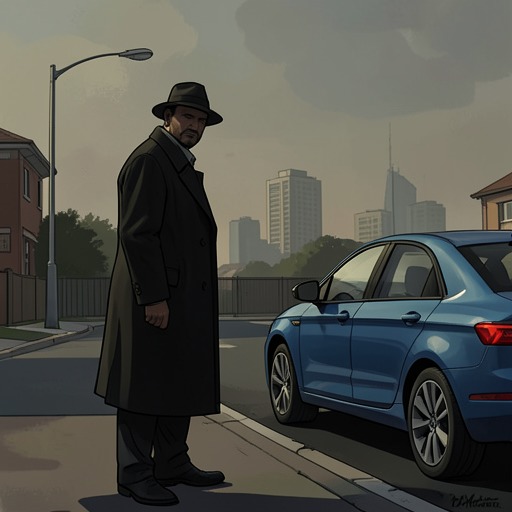
Buskerud Police
The SonBuskerud Police is the regional force investigating the murder of Kjersti Morsand, a case that becomes a test of whether an inquiry can follow evidence when that evidence threatens powerful interests. Inspector Henrik Westad’s work for the force uncovers a credible alibi for Sonny Lofthus and a reason to suspect that Sonny was deliberately placed at the scene, while orders to keep the matter quiet show how institutional pressure can obstruct the search for truth.
Role and Investigation
Kjersti Morsand’s case belongs to Buskerud Police, as Simon Kefas learns when Kari Adel identifies it as the force’s investigation. Inspector Henrik Westad is leading the inquiry. He travels from Drammen to speak with Simon and Kari, bringing the case into contact with their investigation of Sonny and the crimes attributed to him.
Westad’s inquiry had initially produced enough material for a press release, but he held back because something about the suspect’s attitude did not fit. When the suspect later withdrew his confession and claimed an alibi, Westad checked the details rather than treating the confession as conclusive. That decision sets the force’s investigative work against a case narrative that appears settled but cannot withstand scrutiny.
The Alibi and the Timeline
The alibi centered on Leif Krognæss, a Drammen resident who said he had seen Sonny at a lay-by on the old main road near the River Drammen. Krognæss had stopped there after feeling unusually exhausted; a subsequent medical visit revealed a heart problem and led to his admission to hospital. The encounter stayed in his memory in part because Sonny had been among two men seated at another picnic table for hours, and one of them had helped him when he became unwell.
The crucial point was timing. Krognæss’s recollection placed Sonny at the lay-by when Kjersti Morsand was killed, and the medical examiner’s report put the murder at that same time. Westad therefore had an alibi that contradicted the suspicion against Sonny. The evidence also raised the possibility that a strand of hair associated with Sonny had been planted at the crime scene. Neither point alone identified who had arranged the apparent frame-up, but together they made the original accusation doubtful.
Suppression and Institutional Pressure
Westad tells Simon and Kari that he has been instructed to hush up the matter. Someone above his own chief has made clear that the case should be left alone until it can be reviewed again. The stated possibility is that officials want to double-check the facts before a scandal becomes public; Simon, however, immediately connects the suspected frame-up to the possibility that a Staten prison officer helped arrange Sonny’s release and placement.
The exchange distinguishes an investigator’s evidentiary responsibility from the hierarchy’s demand for silence. Westad does not present the instruction as proof of who is responsible, and the evidence leaves the identity of the person applying pressure unresolved. His willingness to explain the facts to Simon and Kari nevertheless brings the suppressed issue into their inquiry, where it can be examined alongside the possibility of corruption within the prison system.
Corruption Across the Case
The murder investigation intersects with a broader criminal arrangement. In the account of Hugo Nestor’s organization, Nestor says Yngve Morsand wanted to kill his unfaithful wife himself and pay others to arrange for someone else to take the blame. The agreed payment was three million kroner. Nestor’s men coordinated with Arild Franck to arrange Sonny’s day release and determine where he would be, while a trusted, corrupt prison officer accompanied him. This account supplies a mechanism for the suspicion that Sonny’s apparent presence at the crime could have been manufactured; it does not establish that Buskerud Police as an institution participated in that scheme.
The case also sits within a wider pattern of alleged police infiltration. Simon describes old rumors of a mole who leaked information to the person controlling much of Oslo’s drug and sex-trafficking trade, known as the Twin. Later, Ab Lofthus’s diary reveals that the corruption involved two police officers, who exploited their paired identities so that one could have an alibi when the other acted. Their account names drug dealing, human trafficking, and murder among the crimes they had enabled. These disclosures place the pressure on Westad within a compromised law-enforcement landscape, without making Buskerud Police itself synonymous with the corrupt network.
Significance
Buskerud Police’s part in the story is defined by the conflict between an investigation’s findings and the forces seeking to control what can be said about them. Westad’s attention to the withdrawn confession, Krognæss’s recollection, and the medical timeline gives the case a basis for challenging the accusation against Sonny. The order to remain quiet shows that evidence does not automatically become public truth: institutional authority can delay its recognition, even when an investigator has reason to doubt the official account.
The distinction between the regional force and the corrupt individuals operating across police and prison institutions matters. The evidence establishes Westad as the lead investigator and shows him reporting an order to suppress the case; it does not show that Buskerud Police collectively arranged the murder or the frame-up. Its narrative significance lies instead in the contested space between careful police work and institutional obstruction, where a credible alibi can unsettle a conviction-shaped story but cannot, by itself, end the corruption that produced it.